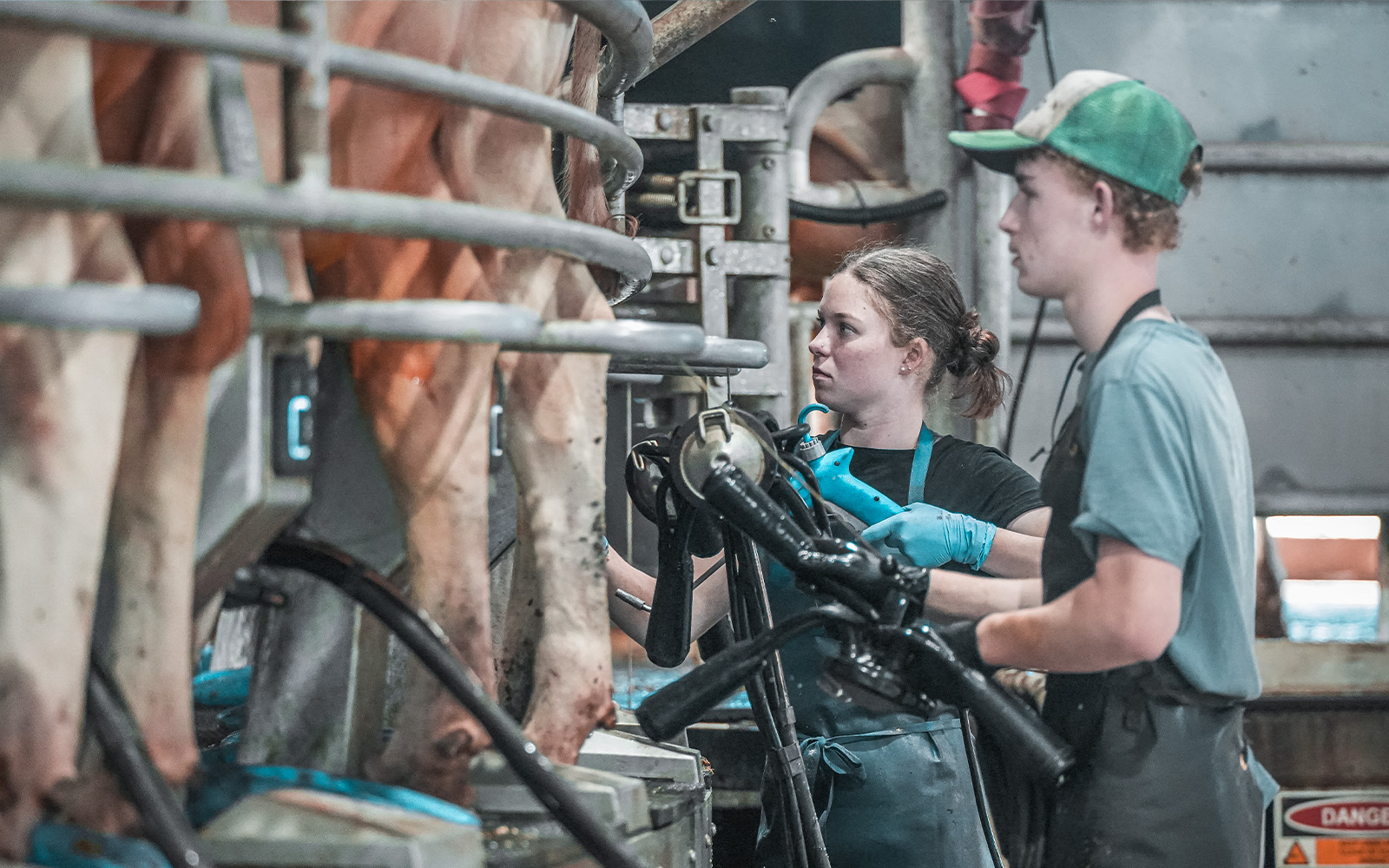
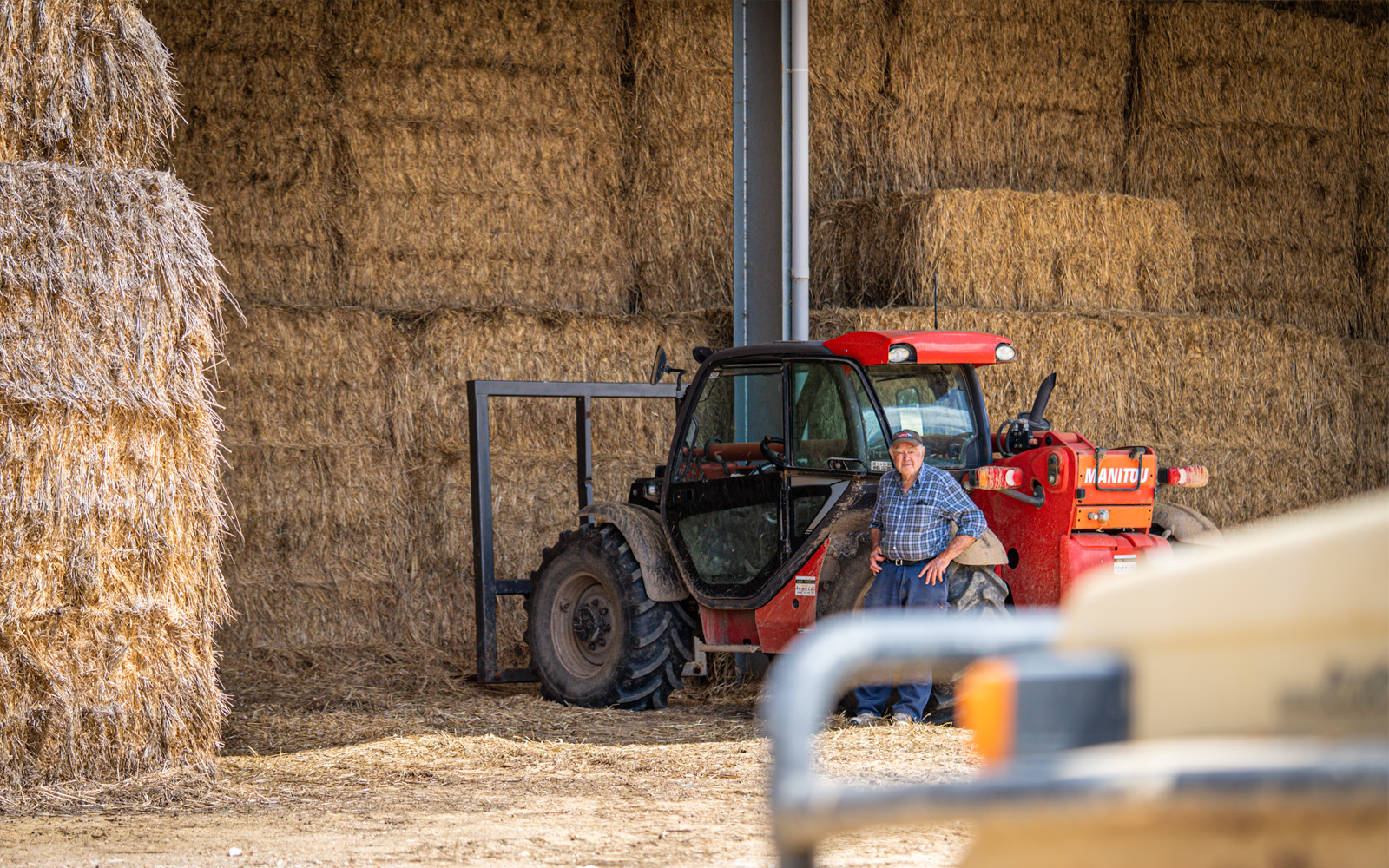
Across much of regional Australia, bushfire risk is an ever-present consideration for farm planning. For farmers in Victoria, New South Wales and South Australia in particular, the increasing intensity and speed of grassfires has reinforced the importance of how and where farm infrastructure is designed, approved and built.
Agricultural sheds protect essential assets, hay reserves, machinery fleets and bulk inputs that underpin enterprise continuity. Ensuring those structures are legally compliant and thoughtfully positioned is not only about meeting regulation. It is about reducing risk exposure and improving resilience across the property.
Understanding bushfire planning requirements early in the design process allows farmers to make informed decisions about siting, materials and layout, before approvals are lodged and costs are locked in.
Why bushfire planning controls apply to farm buildings
Planning and building controls in bushfire-prone areas exist to reduce risk to life, property and neighbouring land. In Victoria, these controls are embedded in the Planning and Environment Act 1987 and administered through local planning schemes.
They influence more than just dwellings. In many cases, outbuildings such as hay sheds, machinery sheds and bulk storage facilities are also subject to bushfire requirements.
These controls typically affect:
- The location of the building on site
- Separation distances from vegetation
- Construction materials and detailing
- Access for emergency services
- Defendable space and water supply
A shed that is poorly sited or designed without regard to bushfire overlays can delay planning approval, increase construction costs, or create avoidable exposure during a fire event. Addressing these considerations at concept stage reduces the risk of redesign and strengthens long-term performance.
Understanding bushfire overlays and BAL assessments
Bushfire prone areas and bushfire management overlays
Hot rolled structural steel protected through hot dip galvanising provides a consistent corrosion control strategy across large industrial and energy projects.
Land in designated Bushfire Prone Areas (BPA) or under a Bushfire Management Overlay (BMO) is subject to specific planning and building requirements.
Where a BMO applies, a planning permit is often required and must address bushfire risk through defendable space, access and water supply provisions.
In Victoria, Class 10a buildings, which include most farm sheds, must be constructed to a minimum Bushfire Attack Level if located within a BPA, in accordance with the National Construction Code (https://ncc.abcb.gov.au/) and relevant state regulations.
Understanding whether your property is affected by a BPA or BMO is the first step in determining the level of compliance required.
What is a Bushfire Attack Level (BAL)?
A Bushfire Attack Level (BAL) assessment measures the potential radiant heat exposure of a building, expressed in kilowatts per square metre.
BAL ratings and construction requirements are defined under AS 3959 – Construction of buildings in bushfire-prone areas.
The assessment considers:
- Proximity to hazardous vegetation
- Vegetation type
- Slope and topography
- Regional fire danger conditions
As the BAL rating increases, construction requirements become more stringent. This can include greater use of non-combustible materials, sealed roof spaces, ember protection measures and tougher glazing systems.
For farm sheds, BAL compliance influences cladding choices, detailing at slab level, ventilation treatments and overall structural performance.
Planning decisions that influence risk and cost
Hay is both a critical feed reserve and a significant fuel source. Bushfire planning for hay sheds involves two considerations: external fire exposure and internal fire risk from spontaneous combustion.
Spontaneous combustion occurs when hay is baled above safe moisture levels. Guidance from Agriculture Victoria outlines that heating can begin when moisture content exceeds recommended thresholds, with ignition possible at high internal temperatures.
Strategic siting away from dwellings and other high-value assets reduces the risk of fire spread. Many producers adopt decentralised storage, distributing hay across multiple sheds or locations to avoid losing an entire reserve in one event.
Design also plays a role. Adequate ventilation, weather protection and sufficient headspace between stacked hay and the roof help manage moisture and heat build-up.
What bushfire planning means for different shed types
Not all agricultural sheds carry the same risk profile. The intended use of the building should inform its design and location.
Hay sheds
Anaerobic digestion plants and waste-to-energy infrastructure can produce organic acids, ammonia and hydrogen sulphide. These conditions require careful material selection and ventilation planning to manage internal corrosion risk.
Research into structural durability in aggressive environments highlights the importance of corrosion management strategies in industrial facilities.
Machinery sheds
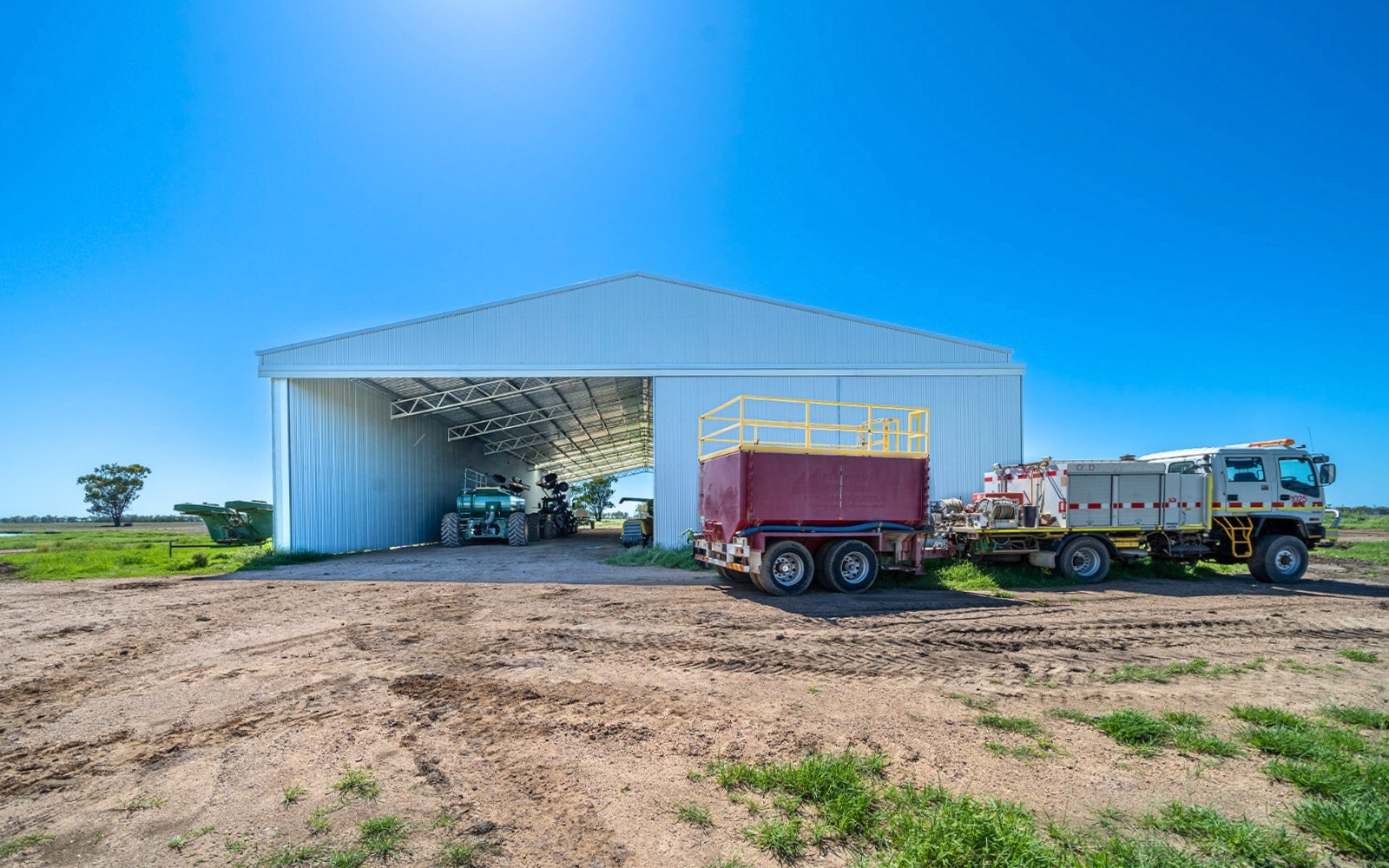
Machinery sheds house high-value equipment that is particularly vulnerable to ember attack.
Ember-driven fire spread is widely recognised by fire authorities, including the NSW Rural Fire Service, as a primary mechanism of structure loss.
Positioning the open side of a shed away from prevailing fire winds, ensuring there are no gaps between cladding and slab, and using non-combustible materials all contribute to improved resilience.
Cleaning and cooling machinery before storage further reduces internal ignition risk, particularly during high fire danger periods.
Bulk storage and input sheds
Bulk grain and fertiliser storage introduces additional considerations. Grain dust is highly combustible, and certain fertilisers require careful segregation and non-combustible storage conditions.
Guidance from Safe Work Australia and state-based regulators highlights the importance of ventilation, safe electrical installations and separation of hazardous materials in agricultural storage environments.
In higher-risk areas, construction detailing aligned with BAL requirements helps prevent ember entry and flame contact, reducing the likelihood of internal ignition.
Different uses demand different responses. A fit-for-purpose approach ensures the building reflects how the space will actually be used.
Access, water supply and defendable space
Bushfire planning extends beyond the building envelope. Fire authorities generally require:
- A managed defendable space or Asset Protection Zone
- A dedicated static water supply, often at least 10,000 litres per major building
- Driveways and access suitable for fire appliance entry
Access and water supply standards are outlined by authorities such as the Country Fire Authority (CFA) and the NSW Rural Fire Service.
Integrating access, water and vegetation management into the overall property plan strengthens both compliance and operational readiness.
Planning early for resilient farm infrastructure
Bushfire planning requirements can appear complex, particularly where overlays, BAL assessments and operational needs intersect. However, they also present an opportunity to design farm infrastructure that performs under real conditions.
Addressing bushfire considerations at the earliest stages of planning helps avoid rework, supports smoother approvals and delivers structures that are robust, compliant and aligned with the realities of Australian farming landscapes.
In fire-prone regions, the most effective protection often begins well before construction, with informed decisions about siting, design and long-term property strategy.
References
Australian Building Codes Board
National Construction Code.
https://ncc.abcb.gov.au/
Standards Australia
AS 3959:2018 Construction of buildings in bushfire-prone areas.
https://www.standards.org.au/standards-catalogue/sa-snz/building/cs-010/as--3959-colon-2018
Country Fire Authority (Victoria)
Bushfire Prone Areas.
https://www.cfa.vic.gov.au/plan-prepare/building-planning-and-regulations/bushfire-prone-areas
Country Fire Authority (Victoria)
Building in bushfire-prone areas and BAL information.
https://www.cfa.vic.gov.au/plan-prepare/building-planning-and-regulations/building-in-bushfire-prone-areas
Country Fire Authority (Victoria)
Asset Protection Zones.
https://www.cfa.vic.gov.au/plan-prepare/your-local-area-info-and-advice/asset-protection-zones
Victorian Planning Authority
Bushfire Management Overlay.
https://www.planning.vic.gov.au/guides-and-resources/guides/bushfire-management-overlay
Victorian Government
Planning and Environment Act 1987.
https://www.legislation.vic.gov.au/in-force/acts/planning-and-environment-act-1987
Agriculture Victoria
Haystack fire prevention.
https://agriculture.vic.gov.au/farm-management/emergency-management/bushfires/haystack-fires
NSW Rural Fire Service
Building in a bush fire area.
https://www.rfs.nsw.gov.au/plan-and-prepare/building-in-a-bush-fire-area
Safe Work Australia
Storage and handling of hazardous chemicals.
https://www.safeworkaustralia.gov.au





 Central author


 Central author : May 7, 2025 7:00:00 AM