Storing hay well has never mattered more. With input costs climbing, increasingly unpredictable rainfall, and pressure on margins across the agricultural sector, farmers are looking for ways to protect the value of every bale. Industry bodies continue to reinforce the importance of feed security, with organisations such as Agriculture Victoria noting that even high-quality hay will lose dry matter and nutritional value if stored outdoors through winter.
At the same time, Meat & Livestock Australia (MLA) reports that uncovered stacks can lose 30–60% of their dry matter over time, compared with 5–10% when hay is stored under a solid roof. Those numbers alone make it clear: the way you store hay is directly tied to feed quality, herd performance, and overall farm profitability.
This article explores what drives those losses, why proper storage matters, and how a well-designed hay shed protects your investment. It also shows how farmers like the Ross family have made storage decisions that continue to pay off year after year.
Why hay sheds deliver consistent ROI
Hay retains its value when it retains its quality. Every percentage point of dry-matter loss translates into a drop in the nutritional value of the feed and a real financial cost for the farm. Research from MLA’s Hay Storage and Processing Manual shows that the biggest drivers of storage losses are moisture, ground contact, repeated wetting and drying cycles, and exposure to UV.
When hay is stored outside—particularly round bales stacked on the ground—losses climb quickly. Over the course of a season, NRE Tasmania estimates that open storage can result in losses of around 30% for round bales in local conditions. That reduction in usable feed directly affects how long stored crops last, how much supplementary feed is required, and the balance sheet at the end of the year.
“Once hay is made, it’s important to store it under cover to minimise yield and quality losses.”
— Agriculture Victoria
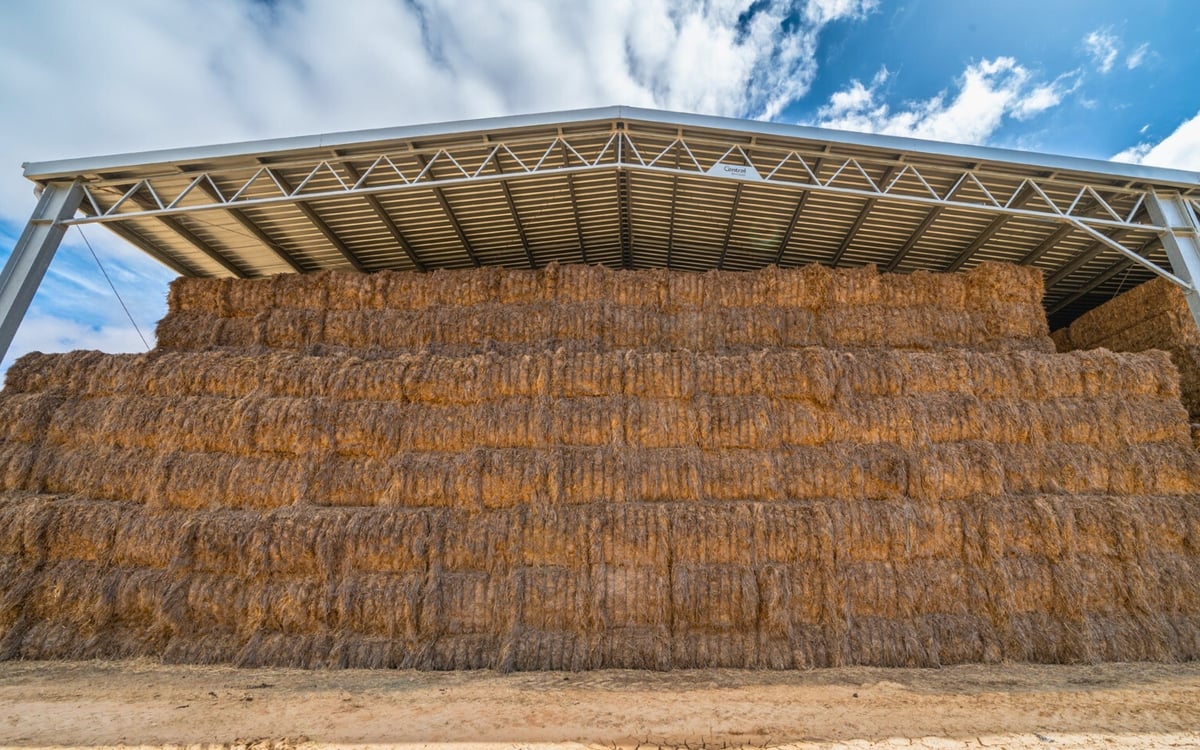
Many Australian producers now view hay sheds as long-term cost-saving investments rather than simple storage structures. This is supported by Meat & Livestock Australia, which shows uncovered hay can lose 30 to 60 percent of its dry matter over time, while well-designed sheds reduce that to 5 to 10 percent. Agriculture Victoria highlights similar findings, noting that storing hay under cover is one of the most effective ways to protect both quality and yield. When those avoided losses are scaled across a full season’s production, the financial benefit of undercover storage becomes significant for most hay-reliant operations.
A well-designed shed also supports more efficient loading, feeding and transport logistics. Reduced handling damage, easier machinery access and clear workflow paths all contribute to time savings and smoother day-to-day operations.
Reducing fire risk with the right hay storage design
Haystack fires are a real and ongoing threat across Australia. According to CFA Victoria, spontaneous ignition remains the leading cause of farm hay fires. When damp hay is stacked without adequate ventilation, internal heating begins. If that temperature continues to rise, fire can start within the stack itself.
The CFA repeatedly warns that:
“Just one damp bale is enough to ignite a haystack.”
That risk increases when hay is exposed to unexpected rainfall, stored in tightly packed stacks where airflow is limited, or placed in areas with high humidity. Poor drainage under outdoor stacks can also cause moisture to wick into the base layer of bales—something many farmers recognise only after spoilage has already begun.
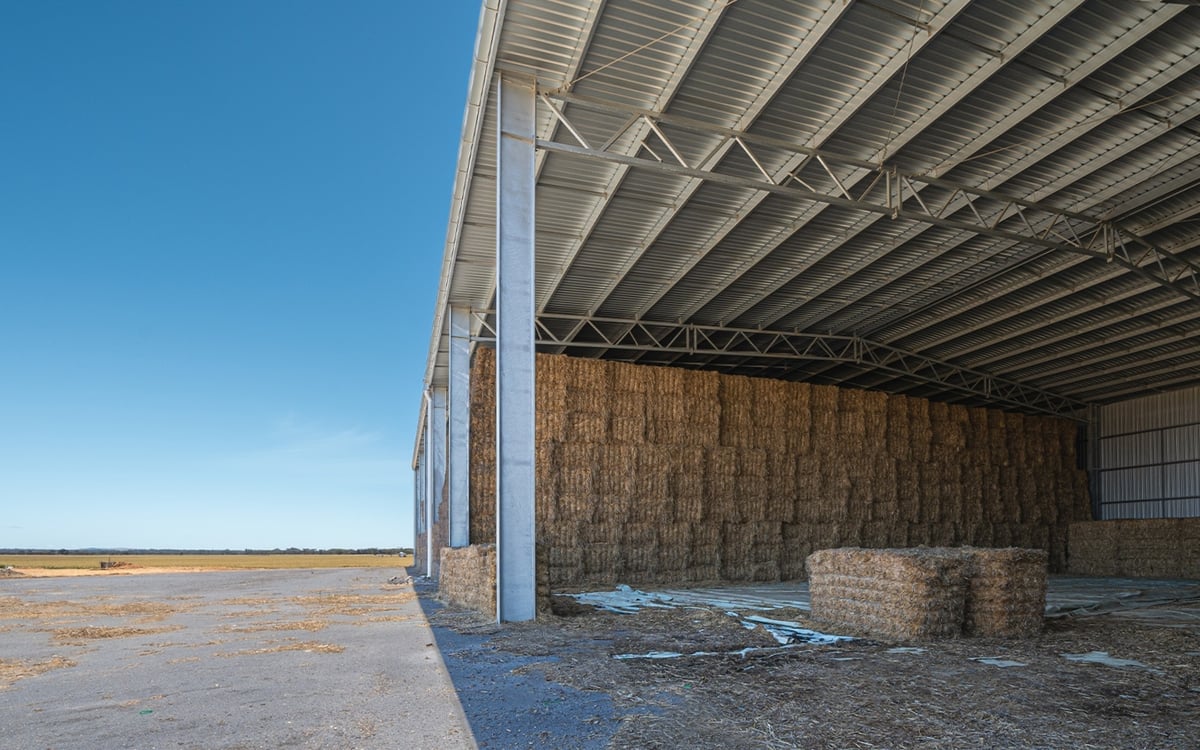
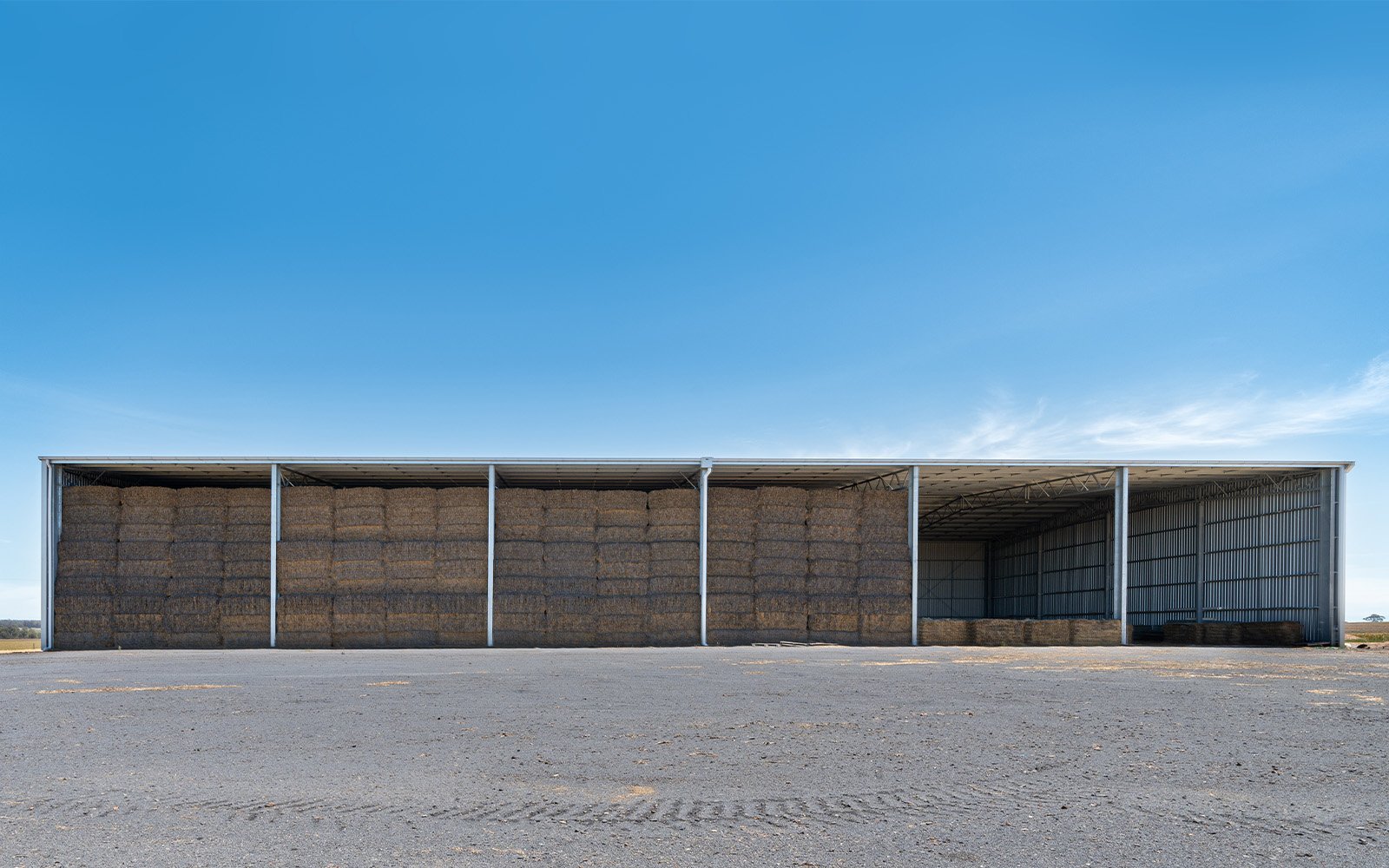
A purpose-built hay shed, positioned correctly and designed to maximise airflow, significantly reduces these risks. Features that make a measurable difference include:
- adequate clearance height
- wide bays for safe machinery movement
- correct orientation to prevailing winds
- hot-dipped galvanised steel for strength and longevity
- open or partially enclosed sides to improve ventilation
- secure foundations and drainage planning
These are the kinds of considerations that can’t be retrofitted easily to an old structure or improvised shed. They need to be part of the design from the start.
Case Study: How the Ross family protected their feed reserves and workflow
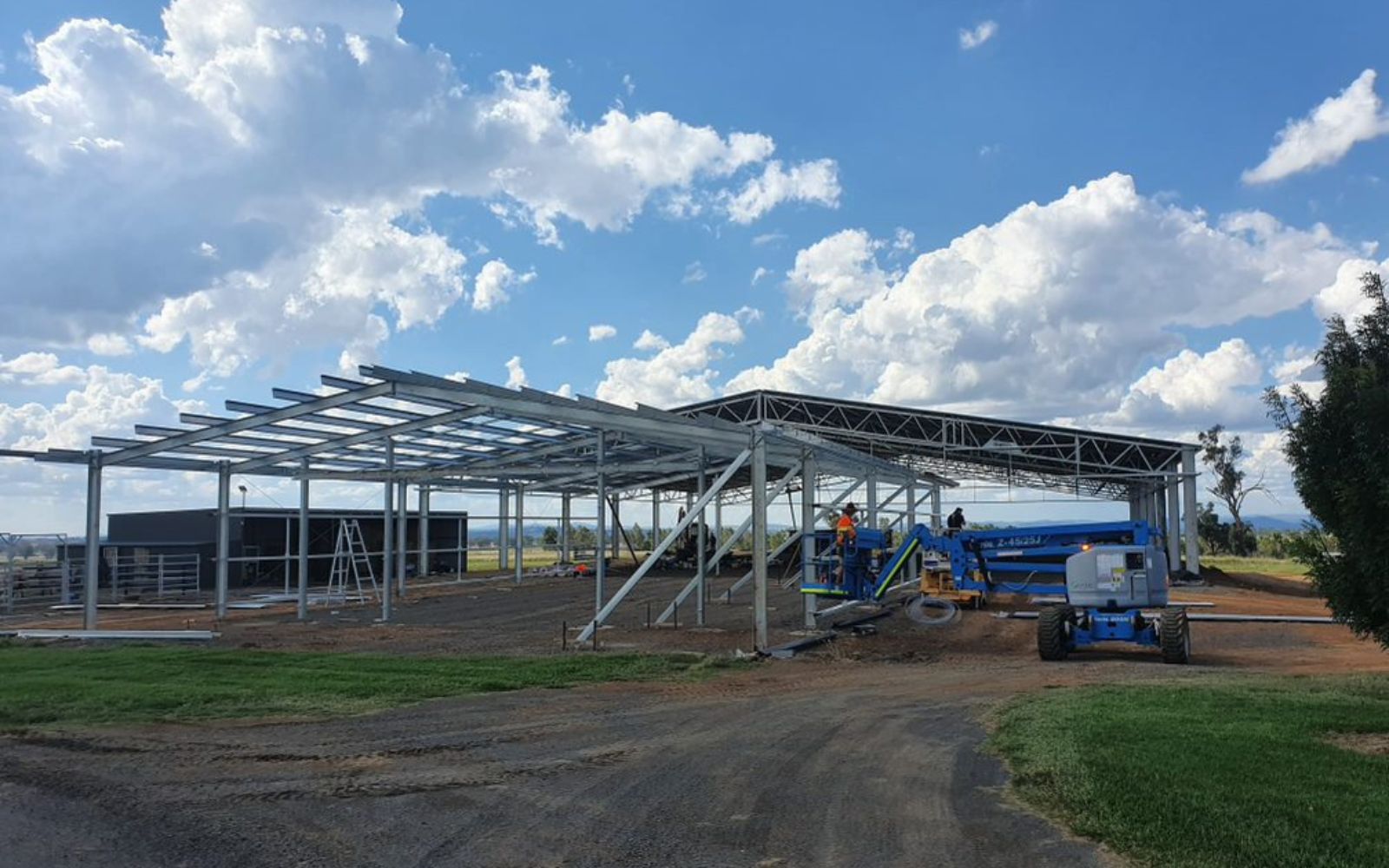
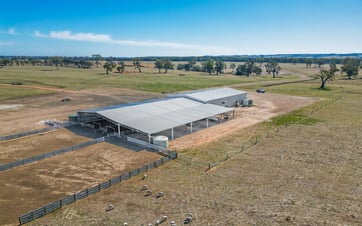
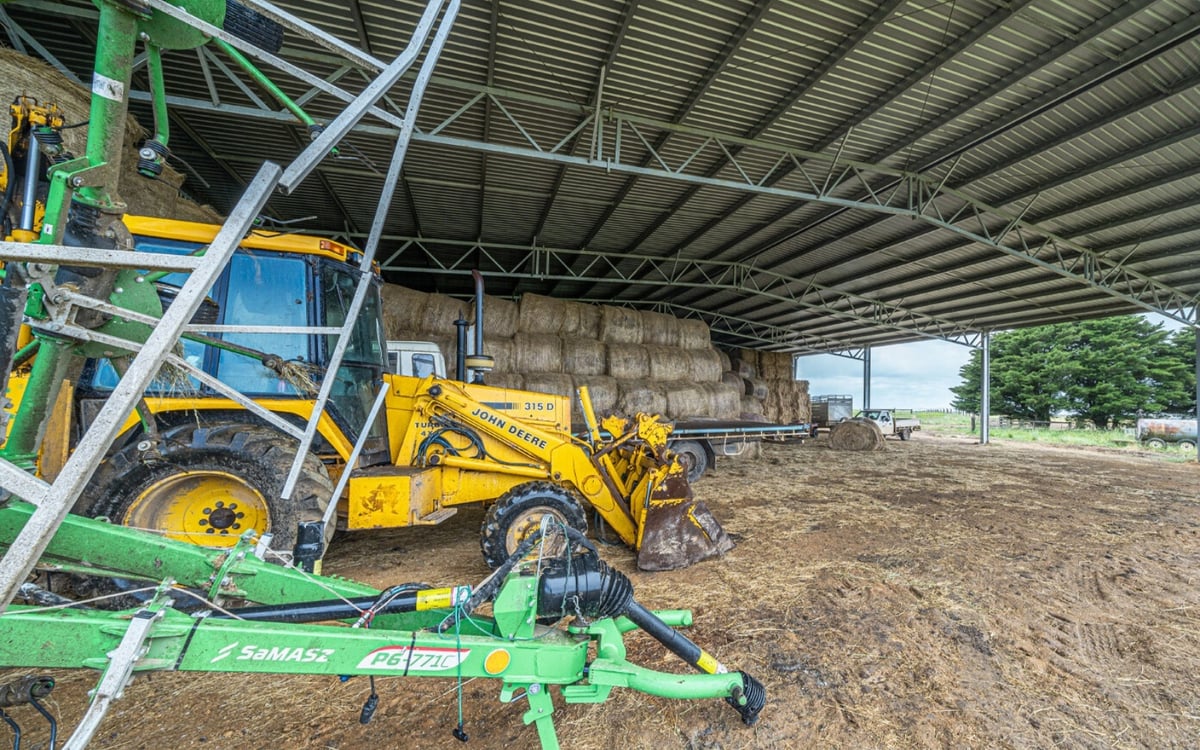
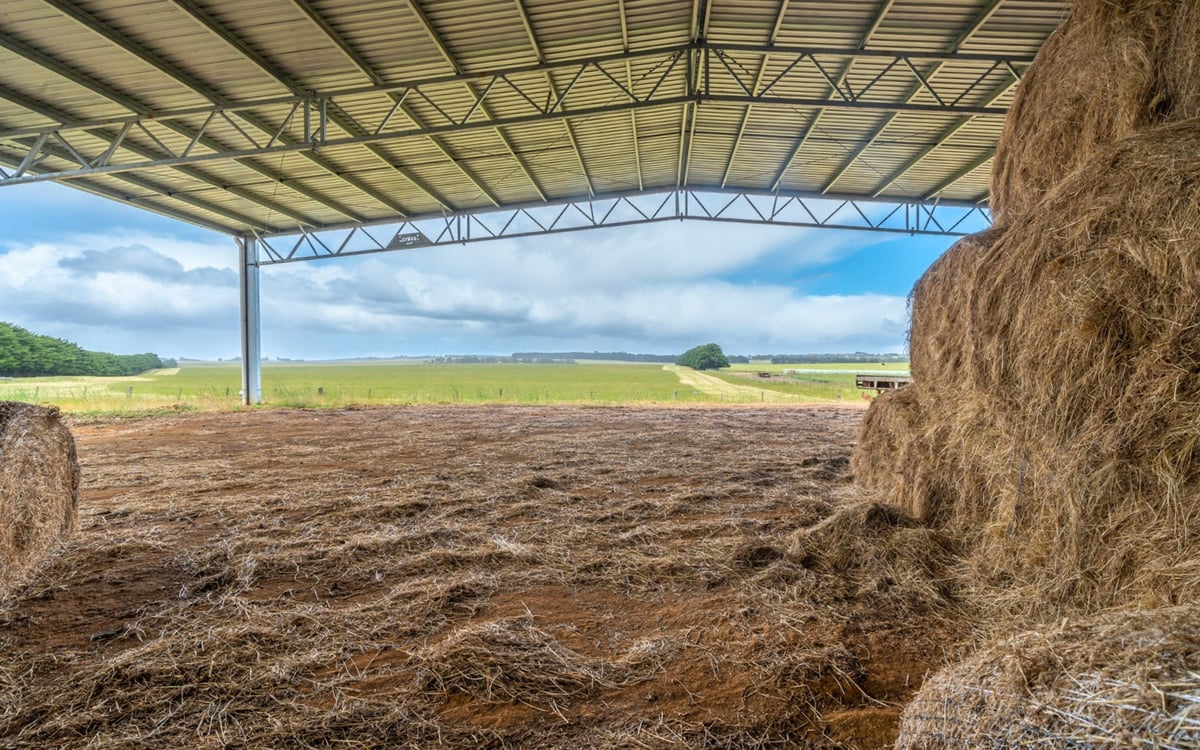
The Ross family’s project is a clear example of a hay shed designed for immediate practicality and long-term value. Producing large quantities of hay each year, they understood the importance of protecting their feed reserves—especially during dry seasons when every bale counts.
Their brief was simple: build a structure that could store more hay, streamline operations, and stand up to the conditions on their farm. Central collaborated closely with them to refine the layout, ensuring wide bay spacing and ample height for their machinery. The final design allowed them to store hay efficiently, access bales quickly, and maintain clear workflow paths during busy periods.
In Bruce Ross’s words:
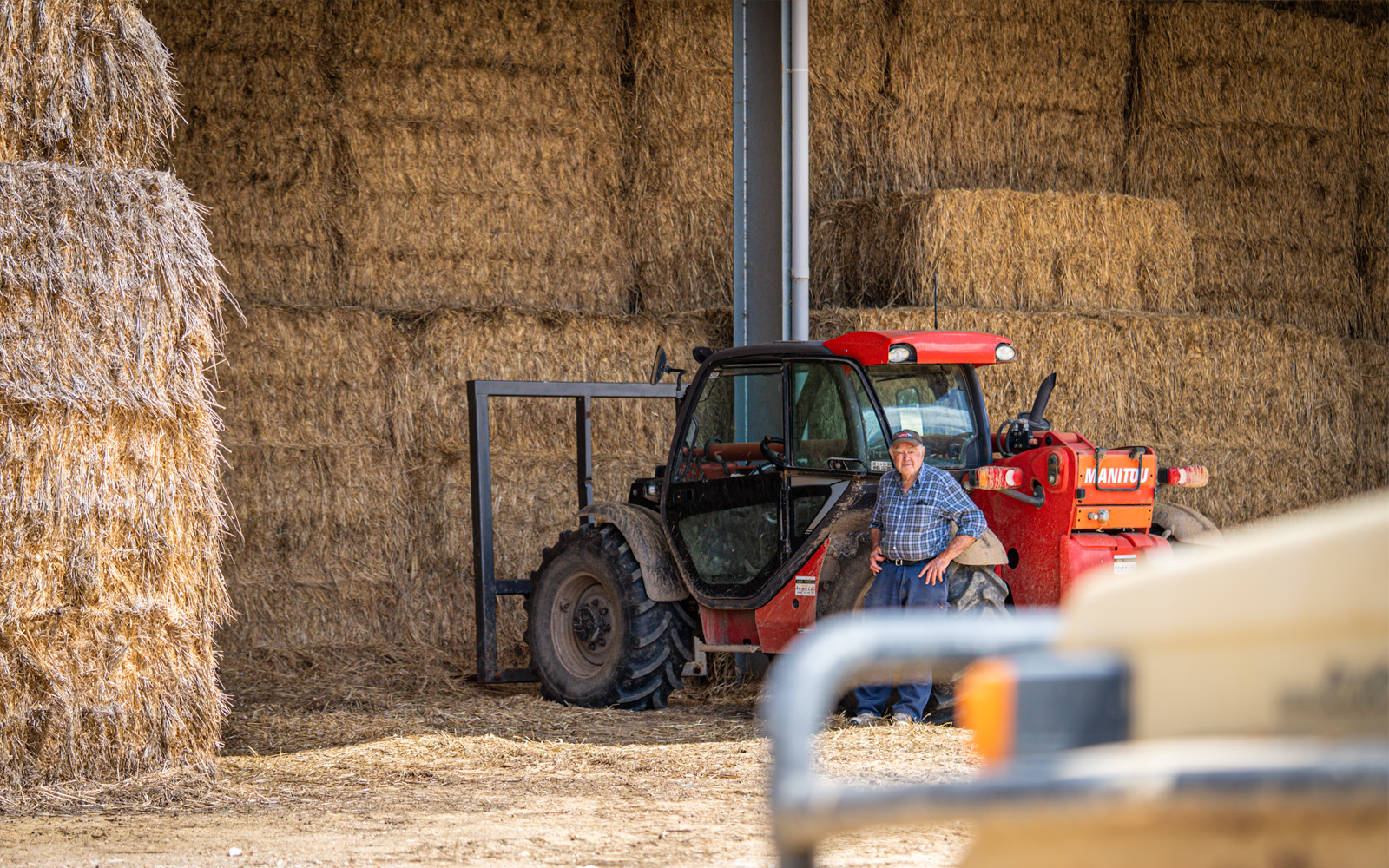
“This shed has been one of the best investments we’ve made. It’s made operations easier, it’s saved us time, and it’s taken the stress out of storage. I know the hay is protected and ready when we need it.”
The shed now plays a year-round role in the Ross family’s operations—from protecting feed during wet months to ensuring their hay remains salable and usable at its highest value.
The Ross project demonstrates how the right structure can answer multiple challenges at once: safeguarding fodder quality, improving logistics, and supporting long-term resilience.
Planning a hay Shed: what farmers should consider
Choosing the right hay shed starts with understanding the specific risks and requirements of your operation. While every farm is different, the following considerations apply broadly across Australia.
- Storage volume and growth
Will your production remain consistent, or is expansion likely? Many farmers opt for additional bays to future-proof their investment.
- Hay shed orientation
Agriculture Victoria notes that positioning sheds to shield hay from prevailing weather conditions is crucial. Good site selection prevents moisture damage, improves airflow, and enhances longevity.
- Structure design
Central’s structures are engineered using hot-rolled steel and finished with hot-dip galvanising—giving farmers confidence their shed can stand up to harsh Australian conditions. Durability is essential when hay is stored year after year.
- Ventilation
Airflow reduces moisture build-up, lowers fire risk, and helps hay retain its quality.
- Machinery access
Wider bays and open spans allow easy movement of balers, telehandlers, and loaders—reducing damage during stacking or retrieval.
- Insurance and safety
Well-designed, well-ventilated storage can strengthen your farm’s risk profile and reduce the likelihood of an incident.
These decisions shape the long-term performance of the shed—and the hay inside it.
Why farmers choose Central for hay sheds
Central has delivered agricultural structures for five decades. The engineering, design, fabrication, and on-site teams work together to build sheds that are fit for purpose, built from heavy-duty steel, and crafted to deliver decades of reliable performance.
Our approach emphasises:
- structures tailored to each farm’s workflow
- durable engineering with hot-dipped galvanised steel
- practical design for machinery access and safe stacking
- clear communication and a straightforward process
- sheds that stand the test of time, season after season
Whether a farmer is storing hundreds or thousands of bales, the goal remains the same: protect the value of what you’ve worked hard to grow.
Ready to plan your hay shed?
Improving hay storage is one of the most effective ways to protect feed value and strengthen farm resilience. A purpose-built shed helps you reduce spoilage, manage fire risk, and maintain the quality of your hay—while saving time across your operation.
If you’re ready to explore what the right structure could look like for your farm, the Central team is here to help. You can start by using the hay shed bale calculator on our Hay Sheds page, download our Central Ag brochure, or reach out to discuss your project goals.
Your hay is an investment worth protecting. A well-designed shed ensures it delivers its full value.
References
Meat & Livestock Australia (MLA)
Hay storage and processing manual. 2016.
https://www.mla.com.au/globalassets/mla-corporate/research-and-development/program-areas/feeding-finishing-and-nutrition/feedlot-design-manual/033-hay-storage-and-processing-2016_04_01.pdf
Agriculture Victoria
Storing hay on farm. Media release, 2024.
https://agriculture.vic.gov.au/about/media-centre/media-releases/2024-releases/storing-hay-on-farm
CFA Victoria
Hay fire safety.
https://www.cfa.vic.gov.au/plan-prepare/how-to-prepare-your-property/farms/hay-fire-safety
CFA Victoria
CFA warns hay producers of high moisture levels in fodder. 2024.
https://news.cfa.vic.gov.au/news/cfa-warns-hay-producers-of-high-moisture-levels-in-fodder
CFA Victoria
Start of hay season prompts safety warning.
https://news.cfa.vic.gov.au/news/start-of-hay-season-prompts-safety-warning
NRE Tasmania
Managing fodder prices for droughts. 2022.
https://nre.tas.gov.au/Documents/Managing_fodder_prices_for_droughts.pdf
Hay and Forage Magazine
Avoid excess hay loss with proper storage.
https://hayandforage.com/article-2688-avoid-excess-hay-loss-with-proper-storage.html
University of Georgia Extension
Minimising losses: hay storage and feeding. 2023.
https://site.extension.uga.edu/forageteam/2023/10/minimizing-losses-hay-storage-feeding
Ohio State University Extension
Hay storage losses. 2019.
https://u.osu.edu/sheep/2019/12/24/3316





 Central author




 Central author : Oct 24, 2023 2:02:40 PM