




 Central author
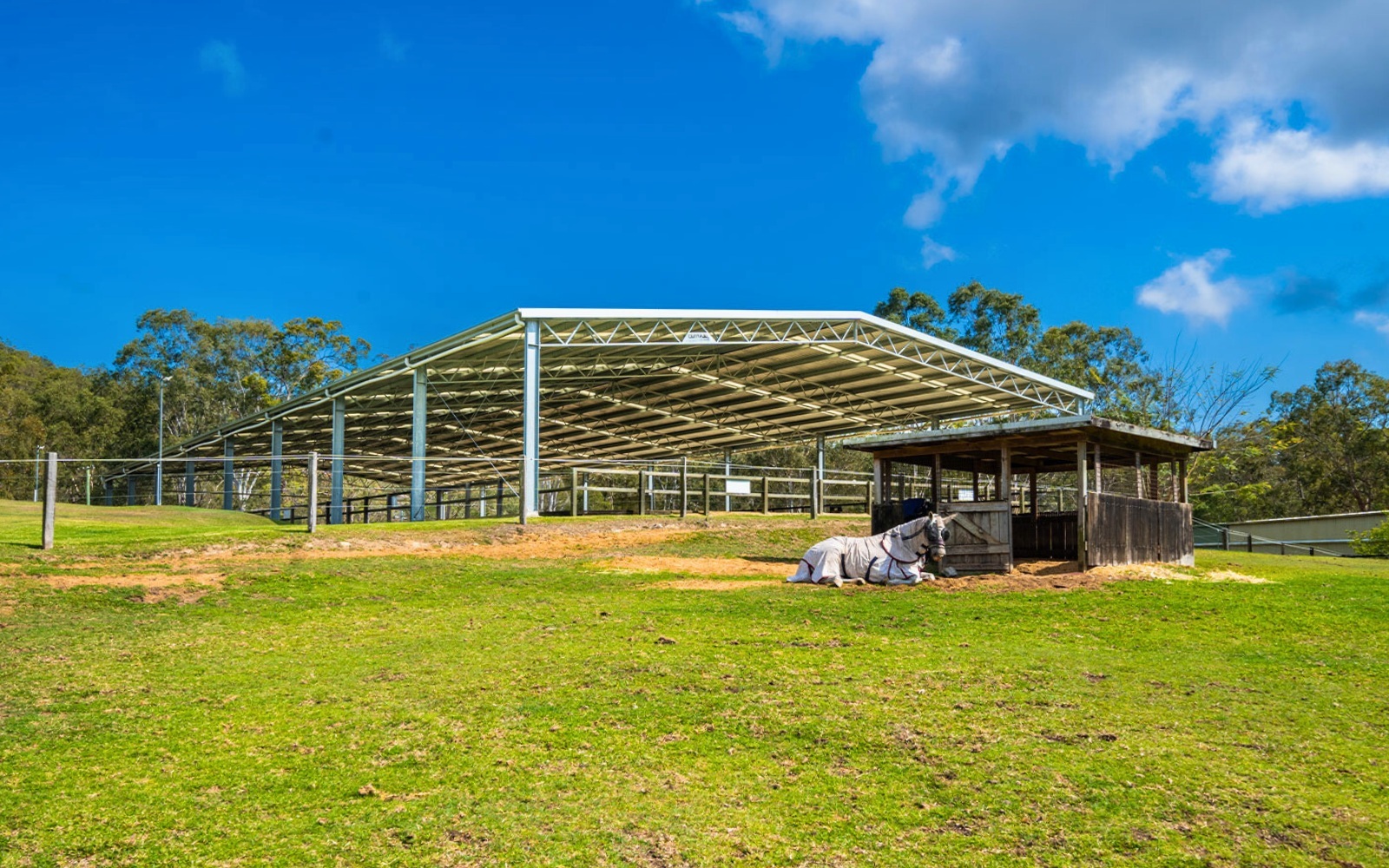
Australia’s climate has always shaped rural infrastructure. What has changed in recent years is the intensity and variability of those conditions — longer dry spells, more severe rainfall events, higher UV exposure and stronger wind classifications across many regions.
As our climate shifts, Australia is expected to continue experiencing increasing temperature extremes and more intense short-duration rainfall events. For equestrian facilities, this translates directly into surface instability, downtime and long-term structural stress.
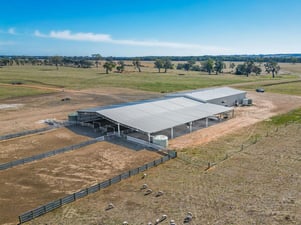
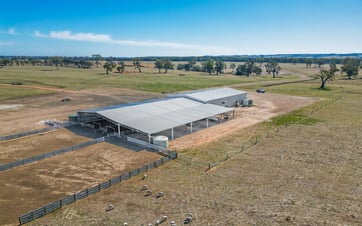
In this environment, a covered horse arena is no longer a discretionary upgrade. It is a climate resilience strategy — protecting both performance surfaces and the long-term integrity of the structure itself.
The decision, however, extends beyond simply adding a roof. Steel specification, corrosion protection, wind engineering and approval pathways determine whether an arena performs reliably for decades — or becomes a maintenance liability.
The operation cost of open-air arenas
An open riding arena in Australia is exposed to three primary stressors:
- Rain and surface washout
- UV and heat load
- Wind-driven dust and moisture imbalance
Heavy rainfall can rapidly compromise footing, leading to uneven compaction and costly resurfacing. In summer, prolonged heat dries surfaces excessively, increasing dust and reducing joint protection. Wind accelerates moisture loss and disrupts training consistency.
For professional facilities, this means cancelled lessons, reduced bookings and inconsistent preparation for competition. For private owners, it often means ongoing surface remediation and shortened footing lifespan.
Moisture control is central to maintaining arena performance. Without protection, surface materials are constantly cycling between saturation and desiccation — a process that breaks down structure and increases long-term cost.
For a broader overview of surface protection and performance benefits, see our article on the benefits of an arena cover, as well as our guide to building a riding arena.
When climate risk becomes personal: The Nicole Tough case study
Operational efficiency is one driver for covered arenas. In some cases, the motivation becomes more personal.
International dressage rider and coach Nicole Tough transitioned to a covered training environment following a melanoma diagnosis — a stark reminder of Australia’s UV intensity.
The Cancer Council Australia consistently reports that Australia has one of the highest skin cancer rates globally. For riders, coaches and working students spending long hours outdoors, cumulative exposure is significant.
Nicole’s Indoor Dressage Arena demonstrates how a covered facility can transform daily training conditions. Beyond rain and wind protection, full overhead coverage provides consistent shade and reduces UV exposure — supporting both rider health and horse welfare.
Her experience reframes the conversation. Climate resilience in equestrian infrastructure is not solely about surface preservation or business continuity. It is also about long-term human wellbeing.
You can read the full case study here.


Steel specification and corrosion protection: Designing for longevity
Once the case for covering an arena is clear, the next question becomes structural performance.
Large-span equestrian arenas demand steel systems capable of delivering clear internal space, long-term durability and resistance to environmental exposure.
Hot-rolled vs cold-formed steel
Many rural sheds use cold-formed(light-gauge) sections. While suitable for smaller structures, these systemscan require additional internal bracing when spans increase.
Hot-rolled structural steel offers higher strength capacity and greater rigidity, allowing for:
- Large clear span riding arenas
- Fewer intrusive knee braces or collar ties
- Greater resistance to accidental machinery impact
- Compatibility with roof-lift construction methods
You can see how structural clarity influences performance in our Indoor Dressage Arenas and Indoor Jumping Arenas.
If you'd like a deeper look at material decisions, dig into our article on why steel choice matters.
Engineering for discipline-specific performance
An equestrian arena is not simply a shed with sand inside. Its proportions, structural design and detailing must align with how the space will be used.
Dressage
Dressage environments prioritise calm, consistent space. Large unobstructed spans reduce visual clutter, while translucent roof sheeting can provide natural light without glare.
Projects such as the Sonter Indoor Dressage Arena illustrate how structural simplicity contributes to performance.
Jumping
Jumping arenas require greater vertical clearance for grid work and combinations. Engineered web truss systems allow increased internal height without excessively raising external wall dimensions.
Facilities such as Samson Park Equestrian Centre demonstrate how structural optimisation supports elite training requirements.
Integrated complexes
Many facilities now combine arenas with stabling to streamline workflow and protect horses during movement between spaces.
Purpose-built combined indoor stable and arena complexes are designed from the outset to coordinate ventilation, drainage and structural alignment.


Navigating Australian approvals and wind ratings
Indoor riding arena construction requires alignment with national and state regulations.
Under the National Construction Code administered by the Australian Building Codes Board, most arena covers are classified as Class 10a (non-habitable) structures.
Approval pathways vary depending on size, zoning and overlays. In addition, Australia’s wind regions dictate structural loading requirements — particularly in exposed rural areas.
Designing for the correct wind classification from the outset prevents costly redesign during approvals. For further insight into regulatory changes, see our overview of current wind assessment standards.
Early coordination between engineering, documentation and fabrication significantly streamlines this process.
A long-term asset perspective
A covered horse arena built with hot dip galvanised structural steel is more than weather protection. It is long-term equestrian infrastructure.
In an Australian climate defined by UV intensity, rainfall variability and wind exposure, engineering rigour determines whether a structure:
- Maintains consistent performance
- Avoids ongoing maintenance cycles
- Preserves property value
- Supports uninterrupted training
Climate volatility is unlikely to decrease. Designing equestrian infrastructure to withstand it — structurally, metallurgically and operationally — ensures arenas remain functional long after short-term weather cycles pass.
When design, engineering and fabrication are aligned from the outset, the result is not simply a covered arena — but a resilient, purpose-built environment engineered for Australian conditions.
References
Bureau of Meteorology
State of the Climate & Climate Change – Australia. 2023.
http://www.bom.gov.au/climate/change/
Cancer Council Australia
Sun Safety – Causes and Prevention. (Year not specified).
https://www.cancer.org.au/cancer-information/causes-and-prevention/sun-safety
Galvanizers Association of Australia
Technical Information – Hot Dip Galvanizing. (Year not specified).
https://gaa.com.au/technical-information/
Australian Building Codes Board
National Construction Code (NCC). (Updated annually).
https://www.abcb.gov.au/